 English
 Spanish
 French
 Japanese
 Korean
 Dutch
 German
 Portuguese

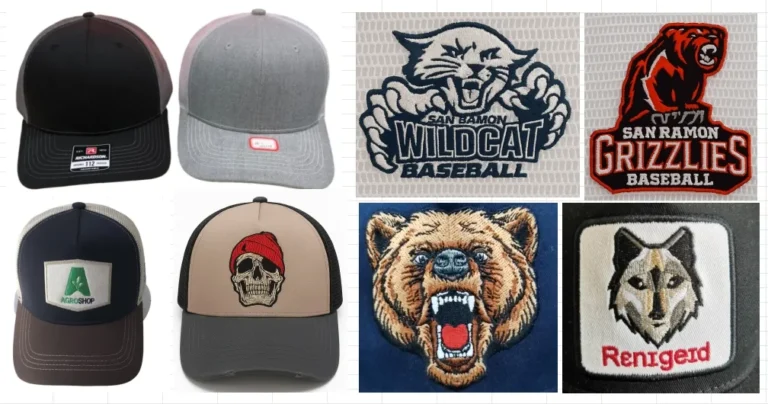

How to Check Fabric, Stitching, Shape and Logo Placement on Custom Caps
When sourcing custom caps for a clothing brand, promotional campaign, or wholesale business, product quality involves much more than choosing an attractive design. Even a well-designed cap can disappoint buyers if the fabric feels different from expectations, the stitching is inconsistent, the crown loses its intended shape, or the logo is positioned incorrectly.
For brands, wholesalers, and importers ordering custom caps from overseas manufacturers, understanding how to evaluate these details is essential. A clear inspection process helps buyers identify potential problems during sample development and confirm that bulk production follows the approved specifications.
How to check custom cap quality? Focus on four essential areas: fabric quality, stitching and construction, overall cap shape, and logo size and placement. Compare each detail against the approved sample, technical specifications, and original design requirements.
This guide explains what to look for, how to check each area, and which details should be confirmed before approving a custom cap sample or bulk production order.
1. How to Check Fabric Quality on Custom Caps
Fabric is one of the first things buyers notice when handling a finished cap. However, checking fabric quality should involve more than simply touching the material. Buyers should evaluate its appearance, consistency, surface condition, and suitability for the intended cap construction.
1.1 Check Fabric Texture and Hand Feel
Start by comparing the fabric with the approved reference sample.
- Surface texture: Check whether the fabric has the expected smoothness, softness, or textured appearance.
- Thickness: Confirm that the material feels consistent with the agreed fabric specification.
- Fabric structure: Check whether the weave or knitted structure is uniform, without obvious irregularities.
- Flexibility: Evaluate whether the material has the appropriate flexibility for the intended cap style.
- Surface condition: Look for visible defects such as holes, snags, stains, excessive loose fibers, or damaged areas.
For example, cotton twill used for a casual baseball cap should have a consistent surface and suitable body. Polyester performance fabric should maintain the expected lightweight construction, while mesh used for trucker hats should have uniform openings and a consistent structure.
1.2 Check Fabric Color Consistency
Color consistency is particularly important for bulk orders involving multiple production batches or different color combinations.
Check the following:
- Compare the fabric color with the approved Pantone reference or signed-off sample.
- Check whether different panels have noticeable color differences.
- Inspect the crown, brim, mesh, and other fabric components separately.
- Look for visible shading variations within the same fabric panel.
- Compare different caps from the same order under consistent lighting conditions.
Remember that screen displays and photographs cannot always represent actual fabric colors accurately. Physical samples and agreed color standards should be used as the main references.
1.3 Check Fabric Performance and Recovery
For certain cap styles, buyers should also consider how the fabric behaves during normal handling.
Gently handle and fold an appropriate fabric sample to observe whether it returns to its expected condition. Check whether the material shows excessive creasing, unwanted deformation, or surface damage.
For performance and outdoor caps, additional testing may be necessary if requirements include moisture management, UV protection, colorfastness, or other technical properties. Visual inspection alone cannot verify these performance claims.
For more information about fabric selection, see our Custom Hat Fabrics Guide.
2. How to Check Stitching and Sewing Quality
Stitching is an important indicator of cap construction quality. Poor sewing can affect the appearance, structural stability, and durability of a finished product.
Instead of checking only whether the seams look neat, buyers should inspect the main construction areas individually.
2.1 Inspect Panel Seams
Most baseball caps are constructed from multiple fabric panels sewn together. These seams determine how the crown is assembled and how the panels fit together.
Check for:
- Even and consistent stitching along panel seams.
- Secure connections without open or separated seams.
- Proper alignment between the front, side, and back panels.
- No obvious puckering, excessive gathering, or uneven fabric tension.
- Consistent seam appearance across different caps.
Pay particular attention to the front panel area. Uneven sewing can affect the appearance of the crown and create an irregular surface for embroidery or other logo applications.
2.2 Inspect Visor and Crown Connections
The visor is a functional and visual component of a baseball cap. Check whether it is securely attached to the crown and whether the stitching follows the intended construction.
- Inspect the stitching connecting the visor to the crown.
- Check whether the visor is centered.
- Look for uneven stitching around the visor edge.
- Confirm that the visor maintains its intended curve or flat profile.
- Check for loose threads or unfinished edges.
2.3 Check Internal Construction
Turn the cap inside out to inspect areas that are not immediately visible from the outside.
- Check the sweatband attachment and finishing.
- Inspect the internal seams and seam allowances.
- Look for excessive loose threads.
- Check whether inside taping is straight and securely attached.
- Inspect the top button and other attached components.
For adjustable caps, also inspect the rear closure attachment points to ensure that the strap, buckle, or snapback components are securely connected.
A cap should look well finished both inside and outside. Clean internal construction is especially important for retail products positioned as premium headwear.
3. How to Check Custom Cap Quality for the Shape and Structure?
Cap shape is one of the most noticeable differences between an ordinary product and a professionally manufactured custom cap. Even when the correct fabric and logo are used, an inconsistent crown or poorly shaped visor can change the entire appearance.
Buyers should evaluate the cap from multiple angles rather than judging it only from the front.
3.1 Check Crown Symmetry
Place the cap on a flat surface or an appropriate headform and inspect it from the front.
Look for the following:
- The left and right sides of the crown should have a balanced appearance.
- The center front panel should be properly aligned.
- The crown should not lean noticeably to one side.
- Panel connections should follow the intended design.
- There should be no unexpected dents, wrinkles, or deformation.
Next, inspect the cap from the side and rear. This helps identify uneven crown height, inconsistent panel shaping, and other structural differences that may not be obvious from the front.
3.2 Check Crown Height and Profile
Different cap styles have different crown structures. Buyers should not apply the same shape expectations to every design.
- Structured baseball caps: The front panels should maintain the specified shape and support.
- Unstructured dad hats: The crown should have the intended soft and relaxed appearance.
- Trucker hats: The front panels should maintain the required structure while connecting evenly with the mesh back.
- Flat-brim caps: The crown and visor should maintain the intended proportions and profile.
Compare the crown height, front panel profile, and overall proportions with the approved sample rather than relying on general expectations about a particular cap style.
3.3 Check Visor Shape and Consistency
The visor should match the specified design in terms of length, width, thickness, and curvature.
For curved-brim caps, check whether the curve is balanced from left to right. For flat-brim designs, confirm that the visor remains sufficiently flat according to the approved specifications.
Also check for:
- Uneven visor edges.
- Unexpected twisting or warping.
- Inconsistent curvature between caps.
- Visible deformation around the visor attachment.
3.4 Measure Important Dimensions
Visual evaluation should be supported by measurements, especially when ordering large quantities or developing a repeat production program.
| Measurement | What Buyers Should Check |
|---|---|
| Crown height | Compare with the approved technical specifications. |
| Brim length | Measure from the agreed reference points. |
| Brim width | Check consistency with the approved design. |
| Head circumference | Verify the specified fit range or size. |
| Panel dimensions | Check symmetry and alignment. |
| Closure adjustment | Verify the intended adjustment range. |
All measurements should follow the same measuring method. Any acceptable dimensional tolerances should be agreed upon before production.
4. How to Check Logo Size and Placement on Custom Caps
For branded headwear, logo accuracy is critical. A logo can be embroidered with good workmanship but still look incorrect if its size, position, angle, or distance from the seams does not match the approved design.
Logo inspection should therefore include both visual evaluation and actual measurements.
4.1 Check Logo Position
The most common logo locations include the front center panel, side panel, rear opening, and visor.
For a front logo, check:
- Whether the logo is centered according to the approved artwork.
- Whether its horizontal and vertical positions are correct.
- Whether the distance from the lower edge or other agreed reference point is consistent.
- Whether the logo is properly aligned with the center front seam, if applicable.
- Whether the logo looks balanced on the actual crown shape.
For side and rear logos, verify the specified distance from panel seams, edges, openings, and closures.
4.2 Check Logo Dimensions and Proportions
Compare the finished logo with the approved artwork or technical drawing.
- Measure the logo width and height.
- Check whether the original proportions have been maintained.
- Confirm that text, symbols, and graphic elements are not distorted.
- Verify that the logo is not too close to panel seams or other design elements.
- Check whether the logo size is consistent across different caps.
For embroidery, also check whether the finished design maintains the intended visual density and detail. For patches, verify the patch dimensions, shape, edge finishing, and attachment position.
4.3 Check Logo Appearance on Different Cap Materials
The same logo design may look different depending on the fabric and cap construction.
For example:
- Structured cotton caps: Check whether the front panel provides a stable surface for the intended logo.
- Unstructured dad hats: Check whether the logo follows the natural curve of the softer front panel.
- Trucker hats: Check whether the logo is positioned correctly on the front foam or fabric panel.
- Leather patch caps: Check whether the patch sits flat and follows the intended alignment.
When reviewing a sample, evaluate the logo on the actual cap rather than approving its appearance based only on a digital mockup.
4.4 Use a Logo Placement Reference
One of the most effective ways to prevent placement misunderstandings is to create a logo placement reference before sampling.
The reference should include:
- Logo artwork in its final approved form.
- Logo width and height.
- Distance from the agreed panel or edge reference points.
- Horizontal and vertical alignment requirements.
- Decoration method, thread colors, or patch specifications.
- Reference photographs showing the intended position.
Both the buyer and manufacturer should use the same reference when reviewing the sample and checking bulk production.
5. Why an Approved Pre-Production Sample Matters
A digital design can communicate the general appearance of a custom cap, but it cannot fully demonstrate the actual fabric hand feel, sewing quality, crown structure, or finished logo appearance.
This is why approving a physical pre-production sample is an important step before mass production.
Before giving sample approval, buyers should confirm:
- Fabric type, color, and material specifications.
- Crown construction and overall cap profile.
- Visor dimensions and curvature.
- Panel sewing and internal finishing.
- Logo artwork, dimensions, colors, and placement.
- Closure type and adjustment function.
- Labels, trims, and other customized details.
Once the sample is approved, it should be retained as a reference for bulk production. Any changes made after approval should be documented and confirmed by both parties.
For a better understanding of production quality issues, you can also read our guide on How to Inspect Custom Hats Before Shipment.
6. Common Quality Problems Buyers Should Not Ignore
Some quality issues may appear minor when examining one cap but become much more noticeable across a large production order.
| Quality Issue | Possible Impact | Recommended Check |
|---|---|---|
| Fabric color variation | Inconsistent appearance between products. | Compare with approved color references. |
| Uneven stitching | Poor appearance and potential construction weakness. | Inspect panel seams and attachment points. |
| Asymmetrical crown | Unbalanced appearance when worn. | Check the front, side, and rear profiles. |
| Incorrect visor shape | Different appearance from the approved design. | Compare curvature and dimensions. |
| Misplaced logo | Reduced brand presentation and design inconsistency. | Measure against the approved placement reference. |
| Loose patch edges | Unfinished appearance or potential detachment. | Inspect attachment and edge finishing. |
| Inconsistent dimensions | Variation in fit and product proportions. | Measure using consistent reference points. |
Buyers should distinguish between critical, major, and minor defects according to the product requirements and agreed acceptance criteria. A clear defect classification helps both parties make consistent quality decisions.
7. A Practical Custom Cap Quality Inspection Checklist
Use the following checklist when reviewing samples or inspecting selected units from a bulk production order.
Fabric
- Fabric type matches the approved specifications.
- Texture and thickness are consistent.
- No obvious holes, stains, or surface defects.
- Color matches the approved reference.
- Different panels have consistent material appearance.
Stitching
- Panel seams are neat and secure.
- No obvious broken or open seams.
- Visor attachment is even.
- Internal seams and sweatband are properly finished.
- Loose threads are removed.
Shape
- Crown structure matches the approved sample.
- Left and right sides are reasonably symmetrical.
- Crown height and profile meet specifications.
- Visor length and curvature are correct.
- Measurements fall within agreed tolerances.
Logo
- Artwork matches the approved design.
- Logo size and proportions are correct.
- Logo position and alignment are accurate.
- Thread or patch colors match the references.
- Logo decoration is clean and consistent.
8. Work with an Experienced Custom Cap Manufacturer
Consistent custom cap quality depends on more than the final inspection. It requires accurate specifications, suitable materials, experienced sewing technicians, controlled logo application, and clear communication throughout product development.
At QINGDAO SINOTIN HEADWEAR CO., LTD., we specialize in OEM and ODM custom headwear manufacturing for brands, wholesalers, distributors, and promotional product companies.
Our product range includes:
We work with international buyers to develop customized cap designs, select suitable materials, confirm logo details, and manufacture products according to approved specifications.
Planning a custom cap order? Send us your design, logo artwork, reference photos, and quantity requirements. Our team can help you evaluate the construction details and develop a sample for approval before bulk production.
Contact Sinotin Cap today to discuss your OEM or ODM custom hat project.
Frequently Asked Questions
What are the four most important things to check on custom caps?
The four key areas are fabric quality, stitching and sewing construction, overall cap shape, and logo size and placement. These factors have a direct impact on the appearance, consistency, and perceived quality of custom headwear.
How can I check whether a custom baseball cap is well made?
Inspect the fabric, panel seams, crown symmetry, visor attachment, internal finishing, and logo decoration. Compare the cap with the approved sample and measure important dimensions against the technical specifications.
How do I check logo placement on custom hats?
Use an approved logo placement reference that specifies logo dimensions, distance from reference points, and alignment. Measure the finished logo and compare its position with the approved technical drawing or sample.
Should I approve a physical sample before bulk production?
Yes. A physical pre-production sample allows buyers to evaluate actual fabric, construction, shape, logo appearance, and other customized details before authorizing mass production.
Can a digital mockup guarantee the final cap quality?
No. A digital mockup is useful for confirming the general design and logo position, but it cannot fully demonstrate actual fabric texture, sewing workmanship, structural support, or finished embroidery quality. A physical sample is recommended for final approval.
What should I send a manufacturer to ensure consistent custom cap quality?
Provide logo artwork, reference photographs, fabric and color requirements, cap dimensions, construction details, logo placement specifications, quantity, and any special quality standards. A detailed technical specification sheet helps reduce misunderstandings during sampling and bulk production.