 Portuguese
 English
 Spanish
 French
 Japanese
 Korean
 Dutch
 German
How Order Quantity Affects Wholesale Cap Pricing
For brands, wholesalers, retailers, and promotional product distributors, ordering more caps may unlock better wholesale pricing. However, the lowest price per piece does not necessarily represent the best purchasing decision. A large order can also increase inventory pressure, tie up working capital, and create additional risks if market demand changes.
So, how many custom caps should you order to get competitive factory pricing without purchasing more inventory than your business needs?
In this guide, we examine wholesale cap pricing from a B2B purchasing perspective. We explain how to evaluate price breaks, compare different order quantities, manage multiple colorways, consolidate purchasing requirements, and balance unit cost against inventory risk when sourcing custom headwear.
1. Understanding Quantity-Based Wholesale Cap Pricing
Most custom hat manufacturers offer different unit prices based on order volume. This pricing structure is commonly known as tiered pricing or quantity-based pricing.
Instead of offering one fixed price for every order, a manufacturer may provide different quotations for 100, 300, 500, 1,000, or 3,000 pieces.
The reason is straightforward: production planning, material purchasing, and manufacturing arrangements can become more efficient when a factory receives a larger and more consistent order.
For B2B buyers, quantity-based pricing provides an opportunity to evaluate how much additional investment is required to achieve a lower unit cost.
However, buyers should understand three important points:
- A higher order quantity may reduce the manufacturing cost per cap.
- Price reductions usually depend on reaching specific production quantity thresholds.
- The relationship between quantity and unit price is not always linear. Doubling the order quantity does not necessarily reduce the unit price by half.
The objective is to identify the quantity that offers the best commercial value, rather than automatically choosing the largest available production volume.
2. How to Analyze Wholesale Cap Price Breaks
A price break is a quantity threshold at which the manufacturer offers a lower unit price.
For example, a factory may quote different prices for the same custom embroidered baseball cap at several order quantities.
The following is a hypothetical quotation for illustrating how buyers can evaluate quantity-based pricing. These figures are not actual market prices or Sinotin factory quotations.
| Order Quantity | Unit Price | Total Order Value |
|---|---|---|
| 300 pcs | $4.80 | $1,440 |
| 500 pcs | $4.40 | $2,200 |
| 1,000 pcs | $4.10 | $4,100 |
| 2,000 pcs | $3.90 | $7,800 |
| 3,000 pcs | $3.80 | $11,400 |
In this example, increasing the order from 300 to 500 pieces reduces the unit price by $0.40. However, increasing the order from 2,000 to 3,000 pieces only saves another $0.10 per cap.
This illustrates an important purchasing principle: the additional savings from increasing order quantities may become smaller as production volume grows.
How to calculate the value of a price break
Buyers should calculate both the unit price reduction and the additional purchasing investment.
Unit Price Savings:
Previous Unit Price – New Unit Price = Savings per Piece
Percentage Price Reduction:
(Previous Unit Price – New Unit Price) / Previous Unit Price × 100%
For example, increasing an order from 500 to 1,000 caps in the hypothetical quotation reduces the unit price from $4.40 to $4.10.
- Unit price savings: $0.30
- Percentage reduction: approximately 6.82%
- Additional quantity: 500 caps
- Additional total purchasing investment: $1,900
The buyer must decide whether the additional 500 caps can be sold within a reasonable period and whether the extra $1,900 investment is justified by the expected demand.
This is a more meaningful way to evaluate bulk pricing than looking at the unit price alone.
3. Why Bulk Discounts Have a Limit
One common misunderstanding among wholesale buyers is that ordering significantly more products will always result in proportionally lower prices.
In reality, manufacturing costs do not decrease indefinitely as order quantities increase.
Once a production order reaches an efficient manufacturing volume, some costs become relatively stable on a per-unit basis.
For example, the following costs may not decrease substantially after a certain production threshold:
- Basic fabric and accessory costs
- Embroidery thread and decoration materials
- Standard labor requirements per cap
- Individual packaging materials
- Quality inspection requirements
Some materials may offer better purchasing terms at higher volumes, but the savings depend on supplier agreements and material specifications.
For custom caps, the actual price reduction also depends on whether additional quantities can be produced using the same fabric, colors, logo artwork, and construction.
When additional quantities offer limited savings
Consider a situation where a manufacturer has already optimized production for a 2,000-piece order.
Increasing the order to 3,000 pieces may improve material utilization or production scheduling, but it may not create the same percentage of savings as the increase from 300 to 500 pieces.
For this reason, experienced buyers should pay attention to the marginal savings of each additional quantity tier.
In other words, ask not only how much cheaper each cap becomes, but also how much extra money must be invested to obtain that reduction.
4. How Multiple Styles and Colors Affect Order Quantity Pricing
For fashion brands and wholesale distributors, purchasing decisions often involve more than one color or design.
A buyer may want to order 1,000 caps in several colorways rather than purchase 1,000 pieces of one identical color.
Although the total order quantity is the same, the production arrangement can be different.
Example: One color versus multiple colorways
| Order Structure | Total Quantity | Quantity Breakdown |
|---|---|---|
| Option A | 1,000 pcs | 1 style, 1 color |
| Option B | 1,000 pcs | 1 style, 4 colors, 250 pcs each |
| Option C | 1,000 pcs | 2 styles, 2 colors each, 250 pcs per combination |
Option A generally offers the simplest production arrangement. Options B and C may require additional material allocation, color management, cutting arrangements, and production scheduling.
However, multiple colors do not automatically mean a significantly higher unit price.
If different colorways share the same hat construction, fabric type, logo specifications, and production process, a manufacturer may be able to coordinate the production more efficiently.
Questions buyers should ask their manufacturer
- Does the MOQ apply to the total order or each color?
- Can different colors be combined within one production order?
- Does the same logo artwork apply to all colorways?
- Will changing thread colors require additional setup or production adjustments?
- Can different styles share the same material purchasing arrangement?
These questions are particularly important for brands developing seasonal collections with multiple color options.
For example, a brand ordering custom baseball caps with different logo and color combinations may benefit from discussing a coordinated purchasing plan with its manufacturer before confirming the final quantities.
5. Order Consolidation: How to Make Multiple Purchases More Cost-Effective
Order consolidation is a purchasing strategy that combines compatible product requirements into a coordinated production order.
Instead of placing several small orders separately, buyers may be able to organize multiple colorways or closely related products under one purchasing plan.
This approach can be useful for:
- Brands developing several colorways of the same cap design
- Wholesalers purchasing different colors for retail distribution
- Promotional companies ordering caps for multiple customers
- Retailers planning seasonal headwear collections
- Businesses arranging repeat purchases throughout the year
When does order consolidation work best?
Order consolidation is most effective when products share compatible production requirements.
For example, several baseball cap colorways may use:
- The same six-panel construction
- The same fabric composition
- The same brim structure
- The same closure type
- The same logo size and embroidery method
In this situation, the factory may be able to coordinate purchasing, production preparation, and quality inspection more efficiently.
However, combining unrelated hat styles does not necessarily qualify for the same quantity discount. A structured baseball cap, a mesh trucker hat, and a knitted beanie involve different materials and manufacturing processes.
Buyers should confirm which quantities can actually be combined for pricing purposes instead of assuming that all products in one purchase order count toward the same MOQ or price tier.
6. Bulk Production vs. Split Orders: Which Purchasing Strategy Is Better?
Another important decision is whether to manufacture the entire forecast quantity at once or divide purchases into smaller production batches.
Both approaches have advantages, depending on sales predictability, storage capacity, cash flow, and product lifecycle.
| Consideration | One Large Production Order | Multiple Smaller Orders |
|---|---|---|
| Unit Price | Potentially lower | May be higher |
| Initial Investment | Higher | Lower per order |
| Inventory Risk | Higher if demand is uncertain | More manageable |
| Production Planning | One coordinated production run | Repeated production arrangements |
| Market Flexibility | Less flexibility after production | More opportunity to adjust future orders |
| Replenishment | Inventory is available upfront | Requires additional production planning |
When should buyers choose one large order?
A larger production order may be suitable when:
- The product has proven sales performance.
- Demand is relatively predictable.
- The buyer has sufficient working capital.
- The design and specifications are unlikely to change.
- The business has enough storage capacity.
When should buyers consider split orders?
Smaller production batches may be more appropriate when:
- A brand is launching a new cap collection.
- Sales demand has not yet been established.
- Several colors or designs are being tested.
- Fashion trends may change quickly.
- The buyer wants to protect working capital.
One alternative is to discuss a larger purchasing commitment with scheduled production or shipment releases.
For example, a buyer may negotiate an overall requirement of 2,000 caps while arranging delivery in two batches of 1,000 pieces.
However, this arrangement must be agreed upon with the manufacturer in advance. The factory needs to confirm whether it can reserve materials, allocate production capacity, store finished goods, and maintain the agreed specifications. Payment terms and storage responsibilities should also be clearly defined.
7. How to Choose the Right Order Quantity for Your Business
The right purchasing quantity should be based on expected sales rather than the manufacturer’s lowest available price tier.
Before confirming a custom cap order, buyers should evaluate the following factors.
1. Forecast Actual Sales Demand
Review historical sales data, customer orders, seasonal demand, and planned marketing activities.
If a brand consistently sells 400 caps per month, ordering 1,000 pieces may be reasonable depending on replenishment time and inventory capacity.
For a newly launched design without sales history, a smaller initial order may be a safer decision.
2. Calculate Inventory Coverage
Inventory coverage measures how long the available stock is expected to last based on the sales rate.
Inventory Coverage (Months) = Order Quantity / Average Monthly Sales
For example, if a retailer orders 1,000 caps and expects to sell 250 pieces per month, the order represents approximately four months of inventory, before accounting for existing stock or other supply commitments.
Buyers should compare this inventory period with product seasonality, cash flow, and replenishment lead time.
3. Evaluate the Cost of Holding Inventory
Additional inventory creates costs beyond the original factory purchase price.
These may include:
- Warehouse storage
- Inventory handling
- Insurance and stock management
- Working capital tied up in unsold products
- Markdowns or losses from changing market demand
A small reduction in unit price may not justify holding several additional months of inventory.
4. Consider Product Lifecycle and Seasonal Demand
Custom headwear is often influenced by fashion trends, promotional campaigns, sports seasons, and seasonal retail demand.
A basic black embroidered baseball cap may have a relatively stable sales cycle, while a limited-edition fashion design may have a shorter selling window.
For products with uncertain demand, purchasing flexibility can be more valuable than achieving the lowest possible factory price.
5. Compare the Total Purchasing Investment
Before selecting a quantity, compare the complete purchasing commitment rather than focusing exclusively on the unit price.
At the factory quotation stage, compare:
- Total product cost
- Sample and development expenses
- Packaging requirements
- Payment schedule
- Production and delivery arrangements
- Potential additional costs for split shipments
For international buyers, the final landed cost should also be evaluated separately. Read our guide on How to Calculate Landed Cost of Imported Custom Hats for a more detailed breakdown.
8. How to Request a More Useful Quantity-Based Factory Quotation
A professional factory quotation should help buyers make purchasing decisions, not simply provide one unit price.
Instead of asking a manufacturer, “What is your best price?”, request a quotation with several quantity levels based on the same product specifications.
For example, buyers can request:
- 300 pieces
- 500 pieces
- 1,000 pieces
- 2,000 pieces
Make sure every quotation uses the same:
- Hat style and construction
- Fabric composition and quality
- Logo size and decoration method
- Color requirements
- Back closure and accessories
- Packaging specifications
- Price terms, such as EXW or FOB
Also ask the manufacturer to clarify:
- MOQ per design and per color
- Whether multiple colorways can be combined
- Whether sample and setup fees are included
- Whether the quotation includes individual packaging
- Whether the quoted price changes at specific quantity thresholds
- Whether repeat orders qualify for different pricing arrangements
For a complete quotation preparation checklist, see our related article: How to Get an Accurate Quote for Custom Hats.
9. Wholesale Cap Pricing Strategy: A Practical Example for B2B Buyers
Consider a growing streetwear brand preparing to launch a new embroidered baseball cap.
The brand expects to sell approximately 300 pieces per month but is considering an order of either 500 or 1,000 caps.
Using the hypothetical prices from the earlier example:
| Comparison | 500 Caps | 1,000 Caps |
|---|---|---|
| Unit Price | $4.40 | $4.10 |
| Total Factory Cost | $2,200 | $4,100 |
| Estimated Sales per Month | 300 pcs | 300 pcs |
| Inventory Coverage | 1.67 months | 3.33 months |
The 1,000-piece order saves $0.30 per cap, but requires an additional $1,900 in upfront product investment.
For a brand with reliable demand, sufficient cash flow, and predictable sales, the larger order may be commercially attractive.
For a brand still testing the product, ordering 500 pieces may provide greater flexibility and reduce the risk of holding excess inventory.
The best decision depends on the brand’s financial position and sales forecast, not simply on which quantity has the lowest factory price.
10. Work with a Custom Hat Manufacturer to Develop a Better Purchasing Plan
Choosing the right production quantity requires cooperation between the buyer and the manufacturer.
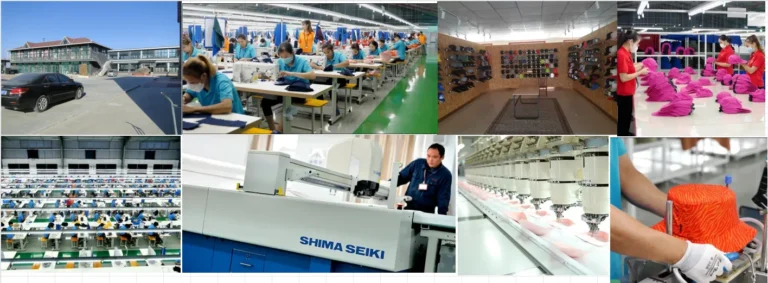
Em QINGDAO SINOTIN HEADWEAR CO., LTD., we provide OEM and ODM custom headwear manufacturing services for brands, wholesalers, retailers, and promotional product distributors.
Our product range includes:
- Custom Baseball Caps
- Custom Trucker Hats
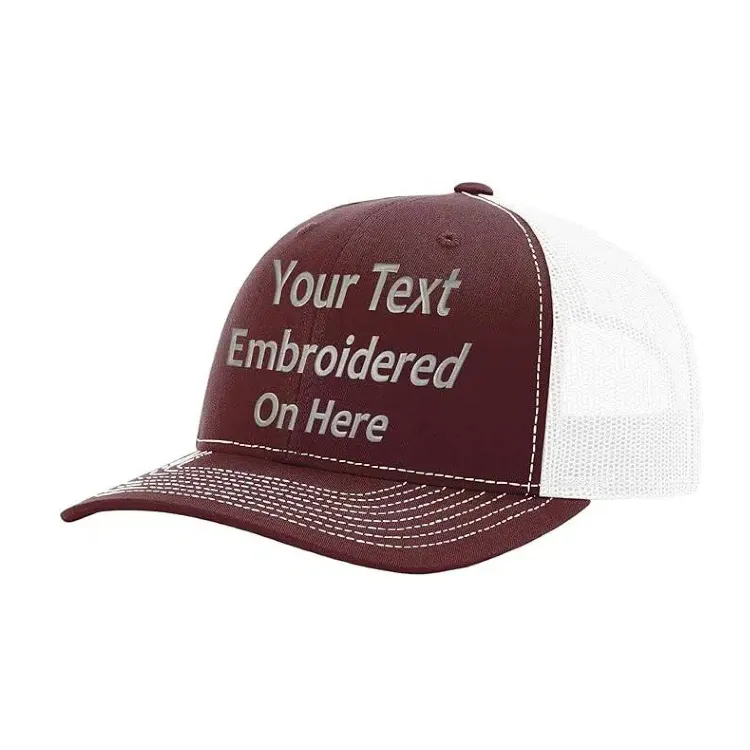
- Custom Embroidered Caps
- Custom Leather Patch and Leather Baseball Caps
- Custom Snapback Hats
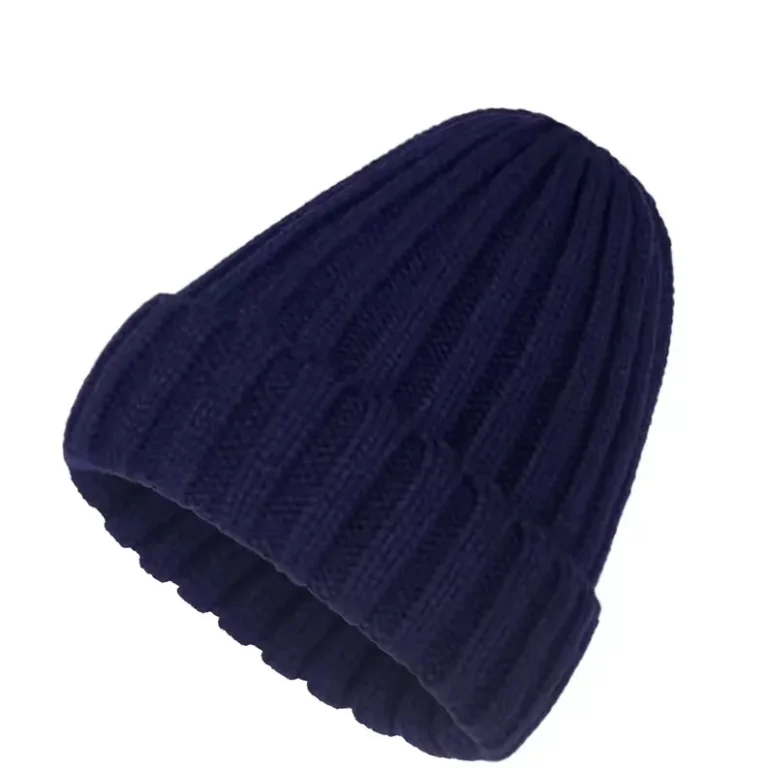
- Custom Beanies
- Custom Bucket Hats
We understand that different buyers have different purchasing needs. A startup may prioritize a manageable initial order, while an established wholesaler may focus on competitive volume pricing and stable repeat production.
Our team can help evaluate your product specifications, order quantities, color combinations, and customization requirements to identify suitable production options.
Looking for competitive wholesale cap pricing?
Send us your reference design, estimated quantity, color requirements, and logo artwork. We can help you compare different order quantities and develop a suitable manufacturing quotation for your business.
Contact Sinotin for a Custom Cap Wholesale Quote
Frequently Asked Questions About Wholesale Cap Pricing
1. Does ordering more custom caps always result in a lower price?
Not always. Larger orders may reduce unit costs through improved purchasing and production efficiency, but the savings depend on the product specifications, materials, customization, and manufacturing arrangement. Price reductions may also become smaller after certain production thresholds.
2. What is a typical wholesale quantity for custom baseball caps?
There is no universal order quantity. Some small brands start with 100–300 pieces, while established retailers and wholesalers may purchase 500, 1,000, or several thousand pieces per design. The appropriate quantity depends on the manufacturer’s MOQ, sales forecast, and purchasing budget.
3. Can different cap colors count toward the same wholesale quantity?
Sometimes. If multiple colorways share the same hat construction, materials, and decoration requirements, a manufacturer may be able to coordinate them within one production order. However, MOQ and pricing rules vary by factory and may apply separately to each design or color.
4. Is it better to order 500 or 1,000 custom caps?
The answer depends on demand and available capital. An order of 1,000 pieces may offer a lower unit price, but 500 pieces may reduce inventory exposure for businesses testing a new design. Compare the total investment, expected sales, and inventory coverage before deciding.
5. Why do wholesale cap prices have different quantity breaks?
Manufacturers use quantity breaks to reflect different production and purchasing arrangements. A larger order may improve material utilization, production scheduling, and setup cost allocation. Each factory establishes its own pricing thresholds based on its operations and supplier costs.
6. Can I negotiate a better price for repeat custom cap orders?
Yes, repeat orders may offer opportunities for more efficient production planning, particularly when the design, materials, artwork, and construction remain unchanged. Buyers should discuss expected annual volumes and repeat purchasing arrangements with their manufacturer.
7. Can I place one large order but receive the caps in several shipments?
Potentially. Some manufacturers can coordinate a larger production commitment with scheduled shipments, subject to agreement on production capacity, storage, payment terms, and delivery arrangements. Confirm these conditions before placing the order.
8. What is the most important factor when choosing a wholesale cap order quantity?
The most important factor is balancing unit price with actual market demand and total inventory investment. A competitive factory price is valuable, but purchasing more products than your business can sell may create unnecessary financial pressure.