 Spanish
 English
 French
 Japanese
 Korean
 Dutch
 German
 Portuguese

Hidden Costs in Custom Hat Manufacturing That Importers Should Know
When sourcing custom hats from overseas manufacturers, importers often focus on the quoted unit price. However, the initial quotation does not always represent the complete financial commitment required to develop, produce, inspect, and receive a custom hat order.
For brands, wholesalers, promotional product distributors, and private-label businesses, unexpected expenses can arise at different stages of the sourcing process. These may include sample revisions, artwork adjustments, custom packaging, additional quality inspections, compliance testing, production changes, and unexpected handling charges.
Even relatively small additional expenses can affect purchasing budgets, product margins, and delivery schedules, especially when importing thousands of custom baseball caps, trucker hats, embroidered caps, or other headwear products.
In this guide, we explain the hidden costs that importers should understand before placing a custom hat order, why these expenses occur, and how to manage them through better supplier communication and purchasing planning.
1. Sample Revisions and Development Adjustments
One of the first potential hidden expenses occurs during the product development stage.
A custom hat sample is not always approved on the first attempt. Depending on the complexity of the design, buyers may request adjustments to materials, colors, embroidery, logo placement, construction, or overall appearance.
Each revision may require additional materials, labor, machine setup, or shipping arrangements.
Common sample-related additional expenses
- Logo adjustments: Changing embroidery size, position, stitch density, or thread colors.
- Material changes: Replacing the original fabric with a different weight, texture, or composition.
- Color matching: Additional fabric or thread adjustments to achieve the required color.
- Construction modifications: Changing crown height, brim shape, panel structure, or closure details.
- Additional sample shipping: Sending revised samples internationally for buyer approval.
For example, a buyer may initially approve a cotton baseball cap sample but later request a softer crown, a different visor curve, and a larger embroidered logo. These changes may require another development round.
How to manage this expense:
- Provide detailed reference photos and product specifications before sampling.
- Confirm logo dimensions and placement using an approved digital mockup.
- Specify fabric composition, color references, and closure requirements.
- Confirm how many sample revisions are included in the original quotation.
- Ask whether sample fees can be credited toward the bulk order.
For a more detailed explanation of development expenses, read our guide to Custom Hat Sampling Cost vs. Bulk Production Cost.
2. Custom Artwork, Embroidery Digitizing, and Logo Setup
Custom logo application involves more than simply placing a logo on a hat.
Depending on the decoration method, additional preparation may be required before mass production can begin.
Potential logo preparation expenses
| Decoration Method | Possible Additional Requirements |
|---|---|
| Flat Embroidery | Digitizing, stitch optimization, and test embroidery |
| 3D Puff Embroidery | Foam selection, digitizing adjustments, and stitch testing |
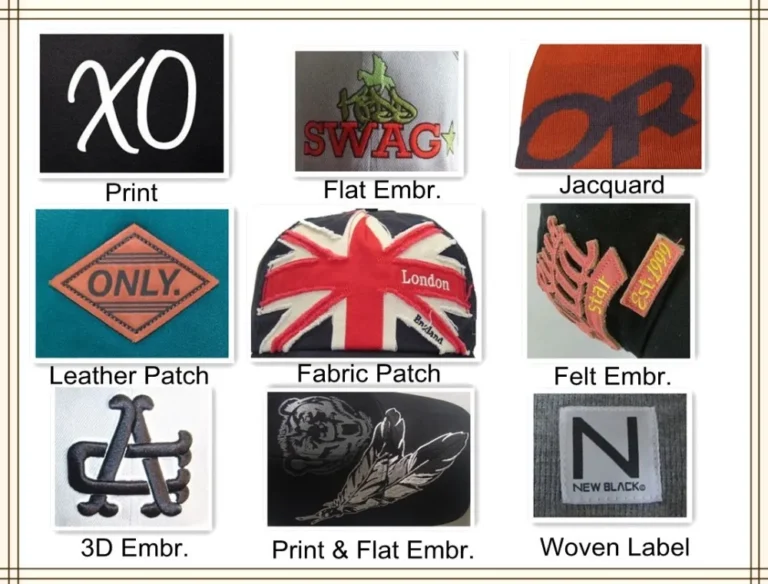
| Woven Patch | Artwork preparation, patch development, and color confirmation |
| Leather Patch | Material selection, engraving setup, and patch tooling where applicable |
| Rubber or PVC Patch | Custom mold development and production setup |
| Screen Printing | Screen preparation and color separation |
These expenses are not necessarily charged separately by every manufacturer. Some factories include certain setup operations in their product quotations, while others list them as individual charges.
Another important consideration is logo complexity. A detailed embroidery design with a high stitch count may require more machine time and testing than a simple logo.
For example, a buyer developing a premium 3D embroidered trucker hat may need several embroidery adjustments to achieve the correct raised appearance and clean edge definition.
How to manage this expense:
- Submit vector artwork whenever possible, preferably AI, EPS, or editable PDF.
- Confirm the logo dimensions and decoration technique before production.
- Ask whether digitizing or mold fees are one-time expenses or recurring charges.
- Clarify whether the setup files or molds can be reused for future orders.
Explore our Custom Felt Embroidered Baseball Caps to see an example of a custom logo application.
3. Custom Labels, Trims, and Branding Accessories
For private-label brands, the hat itself is only one part of the finished product. Branding accessories can also introduce additional development and production expenses.
Depending on the buyer’s retail requirements, a custom hat may need several additional components.
- Woven brand labels
- Printed care labels
- Custom hangtags
- Branded inner taping
- Custom metal buckles
- Special snapback closures
- Custom packaging inserts
- Barcode and SKU stickers
For example, a basic baseball cap may use a standard adjustable buckle. A premium private-label version may require a customized metal buckle, woven brand label, printed care label, and branded hangtag.
Each additional component may involve minimum purchasing quantities, setup requirements, or separate production lead times.
In some cases, the supplier may need to purchase more accessories than the exact number of hats ordered because component suppliers have their own minimum order quantities.
How to manage this expense:
- Prepare a complete branding accessory list before requesting a quotation.
- Confirm which accessories are included in the unit price.
- Ask about minimum order quantities for custom trims.
- Check whether leftover accessories can be stored for repeat orders.
4. Special Packaging and Retail Presentation Requirements
Packaging is another area where importers sometimes underestimate additional expenses.
Standard bulk packaging and retail-ready packaging are not the same. A basic factory quotation may include individual polybags and export cartons, but branded retail packaging usually requires additional materials and labor.
Examples of packaging-related expenses
- Custom printed individual boxes
- Branded polybags
- Custom tissue paper
- Hangtags and barcode labels
- Individual hat inserts or shape-support materials
- Special folding or protective packaging
- Retail-ready assortment packaging
Hat shape protection is particularly important. Poor packaging can cause crowns to become crushed, brims to bend, or finished products to lose their intended shape during transportation.
There is also a relationship between packaging design and shipping efficiency. Oversized packaging can increase carton volume and potentially raise freight charges when transportation is calculated using dimensional weight.
How to manage this expense:
- Confirm individual packaging requirements before production.
- Request carton dimensions and estimated gross weight.
- Discuss how many hats can be packed into each export carton.
- Test packaging protection for structured caps and special brim designs.
- Approve printed packaging artwork before mass production.
5. Quality Problems, Rework, and Replacement Expenses
Quality-related expenses can be among the most disruptive hidden costs in custom hat sourcing.
A production order may look financially attractive at the quotation stage, but inconsistent quality can create additional expenses that are not immediately visible.
Common examples include:
- Incorrect logo placement or embroidery defects.
- Color differences between approved samples and bulk production.
- Uneven stitching or inconsistent panel construction.
- Incorrect measurements or closure specifications.
- Damaged brims or deformed crowns.
- Missing accessories or incorrect product quantities.
When defects are discovered after shipment, buyers may face replacement production, additional international freight, delayed product launches, customer complaints, or inventory shortages.
For retailers and private-label brands, the commercial impact may extend beyond the manufacturing expense because defective products cannot always be sold at the planned price.
Why early quality control matters
Checking products before shipment allows buyers to identify problems while the goods are still at the production facility.
Important inspection points include:
- Material composition and fabric appearance.
- Logo dimensions, position, and embroidery quality.
- Panel symmetry and crown construction.
- Brim shape and stitching consistency.
- Closure functionality.
- Quantity, color assortment, and packaging accuracy.
Importers should establish clear acceptance criteria and agree on how nonconforming products will be handled before mass production begins.
Read our detailed guide: How to Inspect Custom Hats Before Shipment.
6. Compliance Testing and Documentation Expenses
Depending on the destination market, product category, materials, and buyer requirements, custom hats may need additional testing or compliance documentation.
This is particularly relevant for importers selling through established retail channels or supplying products to corporate customers.
Potential requirements may include:
- Restricted substances testing where applicable.
- REACH-related chemical compliance requirements for relevant EU market products.
- Applicable U.S. state chemical requirements, including California Proposition 65 where relevant.
- Material composition documentation.
- Care labeling and country-of-origin information.
- Customer-specific testing reports or supplier declarations.
Not every custom hat order requires every test listed above. Requirements depend on the product, materials, intended use, applicable regulations, and the buyer’s contractual specifications.
Testing costs may increase when the buyer requests multiple material combinations, different colors, or separate reports for different product configurations.
For example, a buyer developing several styles of promotional hats may need to clarify whether one test report can cover the relevant material construction or whether separate testing is necessary.
How to manage this expense:
- Identify destination-market requirements before selecting materials.
- Share the buyer’s compliance checklist with the manufacturer at the quotation stage.
- Confirm which tests are legally required and which are customer-specific requests.
- Clarify whether existing material documentation is available.
- Agree on who pays for testing and what happens if a test fails.
7. Production Delays and Inventory-Related Expenses
Time is another important cost factor in custom hat importing.
When a production schedule is delayed, the financial consequences may go beyond the manufacturing order itself.
For example, a promotional company preparing hats for a scheduled event may need to arrange more expensive transportation if production finishes later than planned.
A fashion brand launching a seasonal collection may also lose sales opportunities if its inventory arrives after the intended selling period.
Possible costs caused by production delays
- Expedited transportation or air freight upgrades.
- Additional warehouse storage.
- Inventory shortages during a product launch.
- Missed promotional or seasonal sales opportunities.
- Extra coordination and order-management labor.
Some delays are caused by incomplete artwork approvals, late material confirmations, or changes requested by the buyer. Others may result from material shortages or production capacity constraints.
How to manage this expense:
- Confirm sample approval deadlines.
- Set clear production milestones.
- Approve materials and color references before bulk production.
- Allow a reasonable buffer before the required delivery date.
- Ask the manufacturer to communicate potential delays as early as possible.
8. Payment Processing, Currency Exchange, and Banking Fees
International payments can introduce additional expenses that importers may overlook when calculating their purchasing budgets.
Depending on the payment method and banking arrangements, buyers may encounter:
- International wire transfer fees.
- Intermediary bank charges.
- Currency conversion spreads.
- Payment processing fees.
- Additional transaction charges for certain payment platforms.
For example, a buyer making several smaller international payments may pay more in total transfer fees than a buyer arranging fewer consolidated payments.
Exchange rate movements can also affect the actual amount paid in the buyer’s local currency.
How to manage this expense:
- Confirm the quotation currency before placing an order.
- Ask the supplier which payment methods are accepted.
- Check whether intermediary bank charges are deducted from the transfer.
- Include payment fees when preparing the purchasing budget.
- Agree on payment milestones in the purchase contract.
9. Unclear Shipping Responsibilities and Destination Handling Charges
Even when a supplier provides a shipping quotation, buyers should understand exactly which services and charges are included.
Depending on the agreed Incoterms and delivery arrangement, some expenses may remain the responsibility of the buyer.
Examples may include:
- Destination customs brokerage fees.
- Port or airport handling charges.
- Import duties and applicable taxes.
- Local delivery charges.
- Storage or handling fees.
- Additional documentation or inspection charges.
These expenses are not necessarily hidden charges imposed by the manufacturer. They may simply be outside the agreed scope of the supplier’s quotation.
Buyers should compare shipping quotations based on the same destination, delivery scope, and applicable Incoterms rather than assuming that all door-to-door or freight-inclusive offers cover identical services.
For a more detailed explanation of transportation options, see our guide to Air Freight vs. Sea Freight for Wholesale Hat Orders.
You can also read How to Calculate the Landed Cost of Imported Custom Hats for a complete overview of the expenses involved in importing goods.
10. Repeat Order Adjustments and Supplier Specification Changes
Another potential expense occurs when a buyer places a repeat order but assumes that the new production batch will be exactly the same as the previous one.
In reality, some materials and accessories may have changed availability, supplier specifications, or production conditions.
For example:
- A fabric supplier may discontinue a particular color or finish.
- A custom metal buckle may need to be reordered in a new production batch.
- Embroidery thread availability may require color confirmation.
- Packaging artwork may need updating when retail information changes.
- A buyer may request a small design modification that requires a new sample.
These changes do not automatically mean that a supplier is increasing prices unfairly. However, they should be communicated and approved before production starts.
How to manage this expense:
- Keep approved samples and final production specifications.
- Save material references, Pantone colors, and logo files.
- Confirm whether custom accessories can be reused for repeat orders.
- Request written confirmation of any specification changes.
- Approve revised samples when changes affect product appearance or construction.
11. Practical Example: How Small Additional Expenses Affect a Custom Hat Order
Consider a hypothetical order of 1,000 custom embroidered baseball caps from an overseas manufacturer.
The buyer initially focuses on the factory quotation and expects the order to require only the agreed production payment. However, several additional expenses may arise during development and order fulfillment.
| Expense Category | Illustrative Additional Cost | Why It Occurs |
|---|---|---|
| Additional sample revision | $40 | Logo or construction adjustment |
| Additional sample courier | $35 | Revised sample shipment |
| Custom packaging upgrade | $100 | Retail-ready packaging |
| Additional inspection | $120 | Buyer-requested third-party inspection |
| Payment and banking fees | $30 | International payment processing |
| Additional documentation or testing | $150 | Project-specific buyer requirements |
| Total Illustrative Additional Expenses | $475 |
In this hypothetical example, the additional expenses total $475, equivalent to $0.475 per hat across the 1,000-piece order.
These figures are illustrative only. Actual charges vary depending on the manufacturer, buyer requirements, testing scope, destination, and service providers. Some expenses may already be included in the original quotation and should not be counted twice.
The key lesson is that importers should evaluate the full project requirements instead of relying exclusively on the initial factory unit price.
12. Importer’s Checklist: How to Avoid Unexpected Costs When Ordering Custom Hats
Before confirming a bulk custom hat order, use the following checklist to review the commercial and production details with your supplier.
Product Development
- Have all sample development charges been confirmed?
- Are sample revisions included in the quotation?
- Are embroidery digitizing and mold fees clearly identified?
- Have materials, colors, and construction details been approved?
Branding and Packaging
- Are labels, hangtags, and custom closures included?
- Is individual packaging included in the unit price?
- Are custom packaging setup fees applicable?
- Have carton dimensions and packing quantities been confirmed?
Quality and Compliance
- Are quality inspection requirements clearly defined?
- Who pays for additional third-party inspection?
- Are product testing or compliance documents required?
- Is there a written agreement for defective or nonconforming products?
Production and Delivery
- Is the production lead time confirmed in writing?
- Are material availability and delivery schedules clear?
- Which shipping charges are included?
- Who is responsible for customs clearance, duties, and destination charges?
- Are international payment and banking fees accounted for?
Having these details confirmed before production can reduce misunderstandings, improve budget accuracy, and make supplier comparisons more reliable.
Conclusion: Understand the Full Cost Before Placing a Custom Hat Order
Hidden costs in custom hat manufacturing do not always come from unexpected supplier charges. In many cases, they result from incomplete specifications, additional development requirements, packaging upgrades, quality problems, or unclear responsibilities between buyers and suppliers.
For importers, the best way to control these expenses is to establish clear product specifications, confirm the quotation scope, define quality requirements, and communicate delivery responsibilities before placing a bulk order.
A professional manufacturing partner should be able to explain which services are included, which expenses may be additional, and what conditions could affect the final order.
En QINGDAO SINOTIN HEADWEAR CO., LTD., we provide OEM and ODM custom hat manufacturing services for brands, wholesalers, distributors, and private-label businesses worldwide.
From custom baseball caps and trucker hats to embroidered hats, patch hats, and other headwear products, our team works with buyers to confirm product specifications, customization requirements, and production arrangements before bulk manufacturing.
Planning your next custom hat project?
Send us your hat design, logo, estimated quantity, and packaging requirements. Our team can help review your specifications and prepare a quotation with clearly defined production requirements.
Explore Our Custom Hat Products | Contact SINOTIN for a Custom Hat Quotation
Frequently Asked Questions (FAQ)
1. What are the most common hidden costs in custom hat manufacturing?
Common additional expenses include sample revisions, embroidery digitizing, custom mold development, branding accessories, retail packaging, quality inspections, compliance testing, payment fees, and additional shipping or handling charges.
2. Are custom hat sample fees always included in bulk production prices?
No. Sample development fees and bulk production charges are often quoted separately. Some manufacturers may credit or refund sample fees after a qualifying bulk order, but buyers should confirm the policy before ordering.
3. Does custom packaging increase the cost of wholesale hats?
Yes. Custom boxes, branded polybags, hangtags, inserts, and special protective packaging may increase the total order expense. Packaging dimensions can also affect shipping costs.
4. Who pays for quality inspection and product testing?
Responsibility depends on the purchasing agreement. Standard factory quality control may be included in the production service, while additional third-party inspections or independent laboratory tests may be charged separately.
5. How can importers avoid unexpected expenses when sourcing custom hats from China?
Importers should provide complete product specifications, confirm sample and setup fees, clarify packaging requirements, establish quality standards, identify applicable compliance requirements, and review shipping responsibilities before placing an order.
6. Should buyers choose a manufacturer based only on the lowest quotation?
No. Buyers should compare quotations based on equivalent product specifications, quality standards, customization scope, packaging, delivery terms, and after-sales responsibilities. A lower initial quotation does not necessarily represent a lower overall purchasing expense.